As Australia’s local Dentist, Pacific Smiles Dental has over 110 centres to allow convenient access to the dental services you need.
 Published on September 21, 2022.
Last reviewed on August 31, 2026
by Dr Ren Sun.
Published on September 21, 2022.
Last reviewed on August 31, 2026
by Dr Ren Sun.
The biggest mistake people make with flossing is not doing it at all. Many of us floss vigorously just before a dental visit, hoping the dentist won’t notice we haven’t done it in the last six months. Others floss occasionally, when they think of it or when a piece of food gets stuck and won’t budge. And some of us don’t attempt it at all, for a variety of reasons.
Why Flossing Matters for Your Oral Health
Flossing should be an important part of your daily oral hygiene routine. Brushing controls a lot of the plaque around your teeth, but a toothbrush can’t reach between them, where plaque tends to build up and stay. If not removed, this plaque can lead to decay and gum disease.
Flossing is often seen as difficult or complicated to get right, and as a result can feel time consuming. However, once you build the habit, it soon becomes a normal part of your daily routine.
How to Floss Your Teeth Step by Step
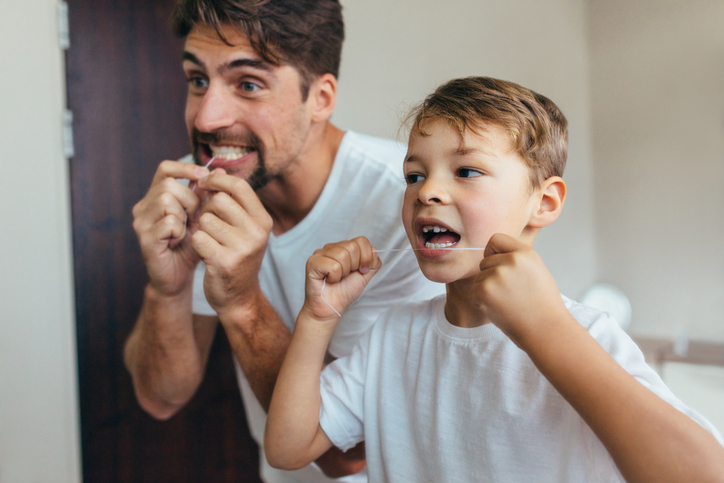
Flossing can feel a little tricky to start with, and if you haven’t flossed regularly in the past, your gums may bleed the first few times. Just remember to be gentle. Standing in front of a mirror can help, so you can look closely at your teeth and see what you’re doing.
Step One
Take a length of floss (about 30cm) and wrap it around the middle fingers on your left and right hand, leaving about 10cm of floss between them.
Step Two
Use your thumb and index finger to pull the floss taut and slide this section gently between your teeth. There should only be about 3cm of taut floss between your index fingers. Use a gentle sawing back and forth motion to slide the floss down between your teeth and along the sides of each one, clearing any debris as you raise the floss back out. You can slide the floss just below the edge of the gum, but be gentle.
Step Three
Work your way around your mouth in a set order so you don’t miss any teeth (for example, starting from the top left, working around the top arch, then down to the bottom right and around the lower arch). Remember to clean the surface behind the last tooth in each arch. Move the floss to a clean section each time you change teeth, or wipe it with a tissue, so plaque from one tooth isn’t carried to the next. Once you’re finished, gently brush your teeth and gums to complete your routine.
Alternatives to Traditional Dental Floss
If you find it difficult to floss using the technique above, there are other aids that can help clean between your teeth:
- Dental floss holders: hand held devices that make flossing easier if you have trouble getting your hands around your mouth.
- Piksters: interdental brushes with lateral bristles that spring out to engage and remove plaque from small crevices between teeth.
- Air floss: a product that uses air pressure and water to clean between teeth, a good alternative for people who don’t enjoy manual flossing.
For more information, next time you visit Pacific Smiles Dental, ask your dentist to show you the best flossing technique for you. It could save you pain and expensive dental bills down the track.
When Is the Best Time to Start Flossing?
Today is always the best day to start flossing. Anything you can do to improve your dental health daily will pay off down the track. Imagine no longer feeling guilty when your dentist asks if you’ve been flossing. It’s also reassuring to know you’re doing everything you can to maintain healthy gums, teeth, and overall oral health, especially since you only get one set of adult teeth.
Should You Floss Your Children’s Teeth?
Once your child’s teeth start to touch, usually between 2 and 6 years of age, a flossing routine can begin. Because flossing requires coordination, children will need assistance or will need to have it done for them until they develop enough manual dexterity, generally around age 10. It’s often easier to gently lean your child’s head back into your lap so you can see clearly into their mouth while flossing their teeth.
Book Your Next Appointment
If you would like to make an appointment with a Pacific Smiles dentist, find a location closest to you or book an appointment online.
Related categories
Latest news

Did You See This From Service NSW? Your Child May Be Eligible for Free Dental Care
13 August 2026
Dental Health Week 2026: Win a kids electric toothbrush
15 July 2026

Should I replace my old fillings?
15 July 2026

What Pacific Smiles Dentists Look For When Treating Patients With Diabetes
15 July 2026